

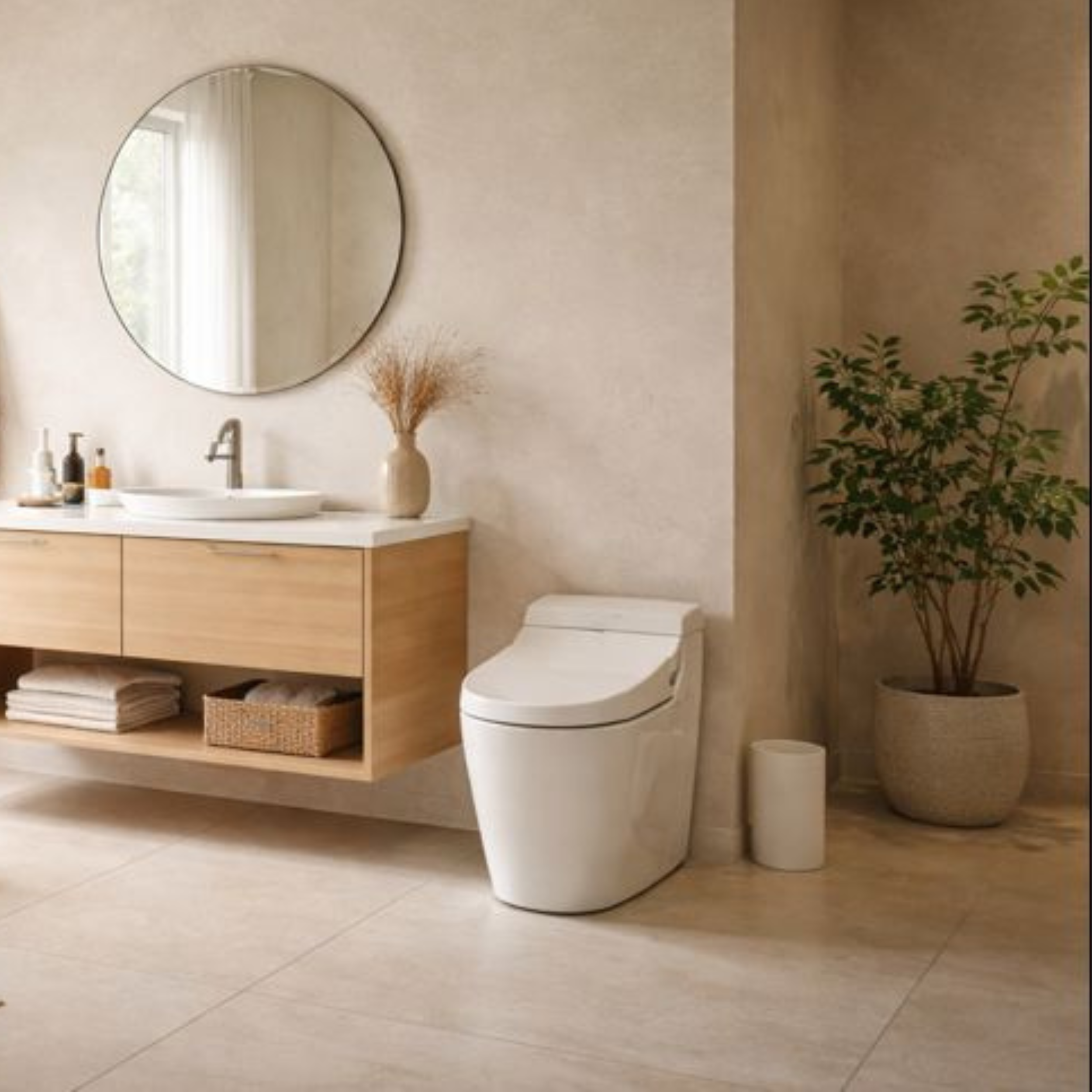
Modern Hygiene Standards (v1.1)
Standards for Excellence in Personal Hygiene
Updated January 1, 2026
Modern Hygiene Standards
Standards for Excellence in Personal Hygiene
Published December 30, 2025
Last Update January 1, 2026
The Modern Hygiene Standards define the baseline requirements for toileting systems, environments, and routines in contemporary residential, institutional, and care settings. They establish the minimum acceptable conditions for effective, dignified personal hygiene.
Any system, environment, or routine that does not meet all applicable requirements is not compliant with Modern Hygiene Standards.
Implementation Guidance is provided for clarity and illustration and does not define compliance requirements.
1. Water-Based Cleansing
Cleansing must be water-based.
This standard addresses cleansing only and does not prescribe drying or completion methods.
Water is the established standard for effective cleaning. Water dissolves and carries residue away from the skin, enabling consistent cleanliness across complex contours and surfaces while remaining gentle on the skin.
• Implementation Guidance: Use water-cleansing systems that deliver controlled, non-abrasive cleaning designed to support skin health and comfort.
2. Hands-Free Routine
Hygiene routines must minimize unnecessary hand contact.
Hands interact with shared surfaces throughout daily life. Reducing hand involvement during hygiene routines lowers exposure risk and supports a cleaner, more consistent experience.
• Implementation Guidance: Use automated or intuitive controls to reduce manual interaction during washing and flushing.
3. Bathroom Environment
The bathroom must function as a personal care environment that supports physical comfort and mental well-being.
Hygiene outcomes are influenced by environmental conditions. Lighting, air quality, ergonomics, and sensory comfort contribute directly to usability, consistency, and adoption, supporting calm, safe, and accessible spaces.
• Implementation Guidance: Design environments that support physical comfort, mental ease, and a positive experience.
4. Early Independence
Hygiene systems must support early independent use.
Personal hygiene is a foundational life skill. Systems designed for intuitive, low-contact operation support independent use for children and others who benefit from simpler, lower-effort interaction, contributing to confidence and long-term self-reliance.
• Implementation Guidance: Use systems that are easy to understand and operate without instruction or assistance.
5. Personal Dignity
Hygiene systems must preserve personal privacy and independence across life stages.
As needs change, hygiene systems designed to preserve autonomy and discretion reduce unnecessary reliance on hands-on assistance. When safe and appropriate, environments that enable independent hygiene support greater dignity, personal control, and more effective use of caregiving resources.
• Implementation Guidance: Use systems that minimize hands-on assistance while maintaining safety and effectiveness.
6. Resource Stewardship
Hygiene systems and environments must prioritize efficient use of resources.
Hygiene systems designed for efficient resource use reduce reliance on consumable materials and associated waste, transport, and resource extraction.
• Implementation Guidance: Use systems that minimize energy and material waste while maintaining performance, favoring durable components and reusable elements.
7. Seamless Integration
Hygiene systems must integrate into existing environments with minimal disruption to behavior, infrastructure, or daily routines.
Widespread adoption is reliant on ease of installation, intuitive use, and compatibility with existing homes and facilities.
These standards apply across residential, commercial, institutional, and care environments and are intended to remain compatible with future technological and design developments.
The Modern Hygiene Standards are stewarded and published by Bare Instinct, a Benefit LLC.
If these standards resonate, stay aligned.